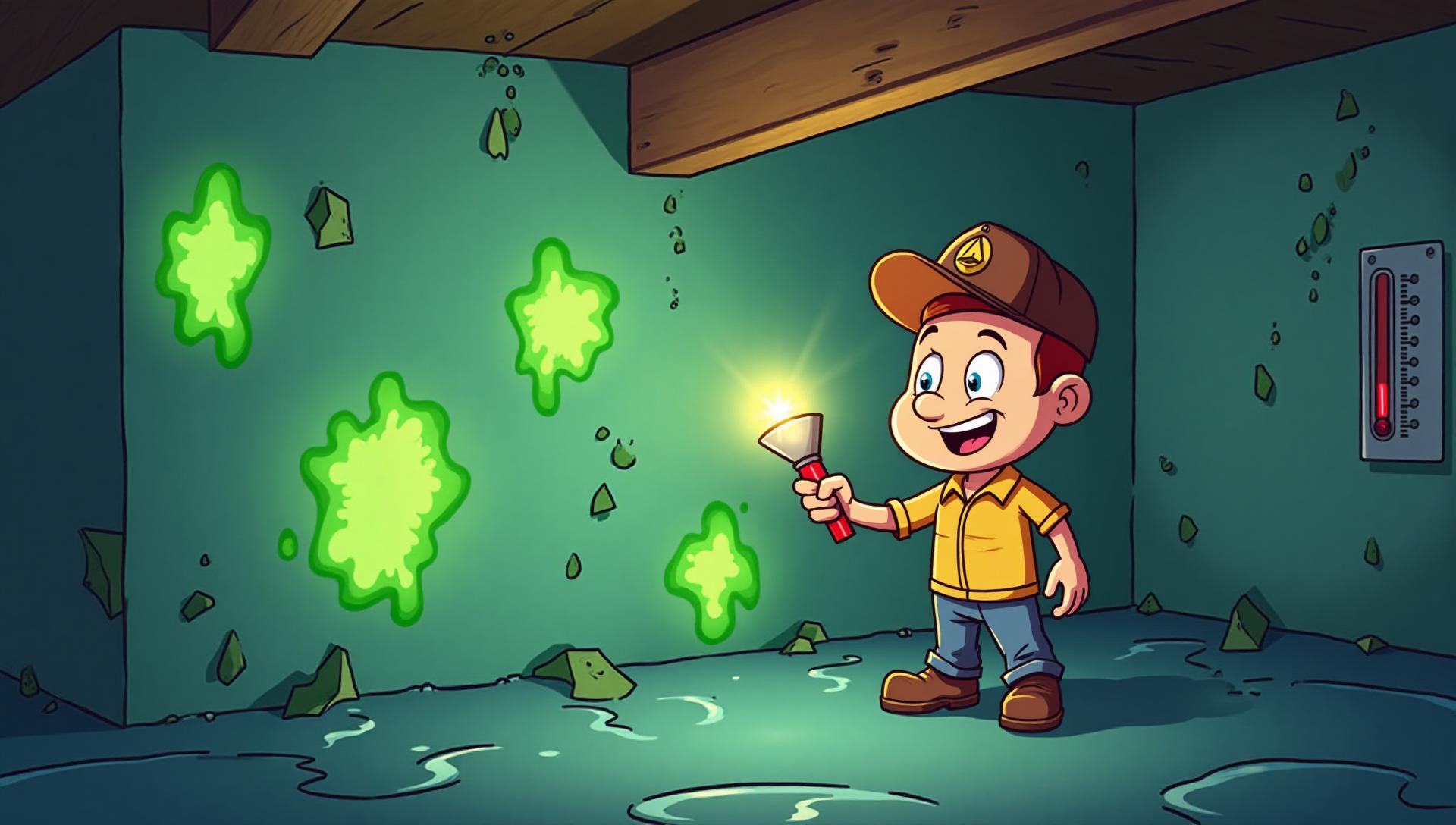
Mold Myths Busted: Real Stories from Chapel Hill
Think bleach kills mold? That black mold is always dangerous? We're debunking myths with real cases.
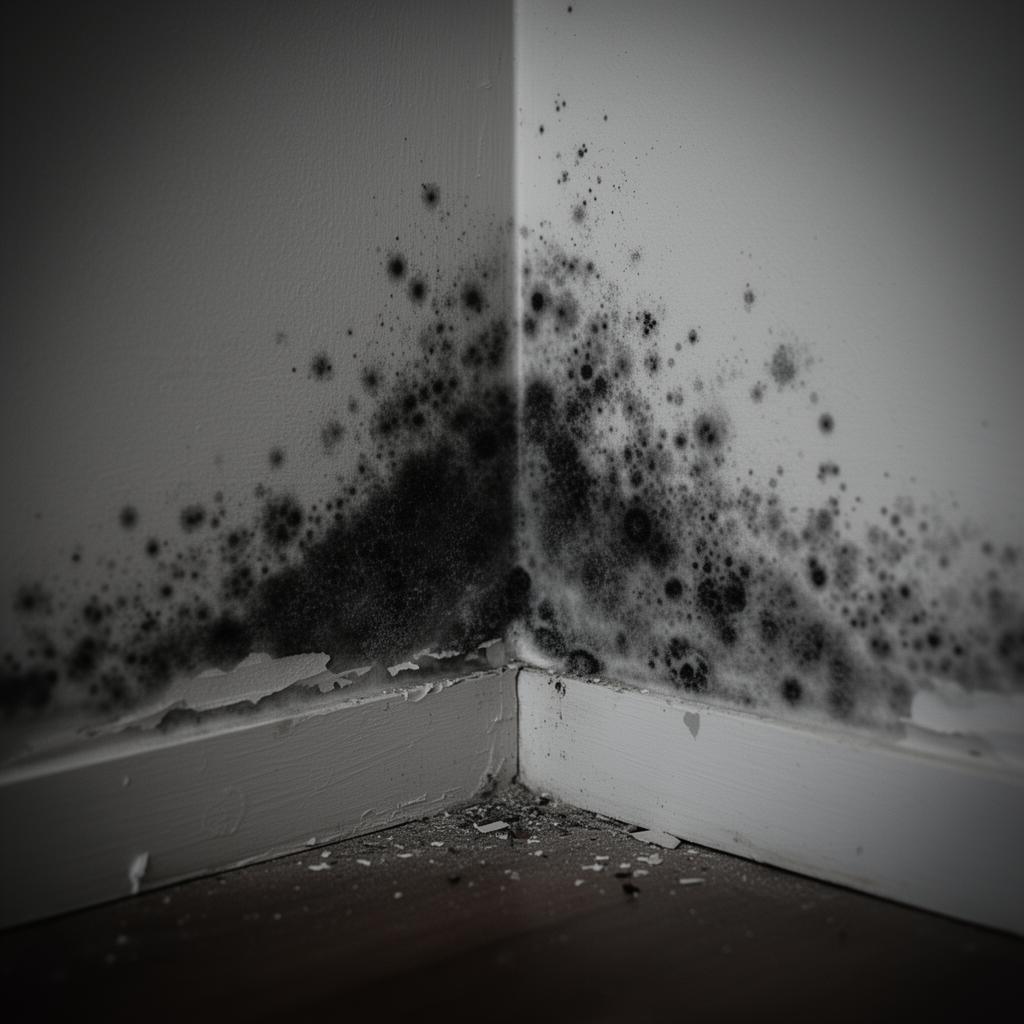
In our years serving Chapel Hill homeowners, we've heard just about every mold myth imaginable. Some are merely ineffective, while others are downright dangerous. Let's separate fact from fiction using real cases from Triangle area homes we've serviced.
Myth #1: "Bleach Kills Mold"
FALSE (And Potentially Harmful)
This is the most dangerous myth because it gives homeowners false confidence that they've solved their mold problem.
The Chapel Hill Case
Last spring, we were called to a home near UNC where the homeowner had been "treating" mold in his crawl space with bleach for six months. Every two weeks, he'd spray affected areas with a bleach solution. The surface looked cleaner temporarily, but the mold kept coming back stronger.
When we inspected, we found extensive mold growth not just on the surface, but deep inside the wood joists. The bleach had actually made the problem worse in three ways:
- Surface treatment only: Bleach is 90% water and doesn't penetrate porous materials like wood. It kills mold on the surface but can't reach the roots (hyphae) growing deep in the material.
- Added moisture: Each bleach treatment added more water to already damp wood, actually feeding the mold problem.
- False security: Because the surface appeared clean, the homeowner didn't address the real issue: a moisture source from poor drainage.
The Truth About Killing Mold
Professional mold remediation uses EPA-registered antimicrobial treatments designed to penetrate porous materials. More importantly, we remove mold-damaged materials and fix the moisture source. Killing visible mold is only 10% of the solution. The other 90% is removing damaged materials and preventing future growth.
Myth #2: "All Black Mold Is Toxic Stachybotrys"
FALSE (But Not Harmless)
The term "black mold" has become almost a boogeyman in homeowner discussions, largely thanks to sensationalized media coverage. The reality is more nuanced.
The Southern Village Story
We were called to a Southern Village home where the homeowner was convinced they had "toxic black mold" and wanted their entire crawl space gutted immediately. They'd seen black growth on floor joists and were terrified.
Lab testing revealed the black mold was actually Aspergillus niger, a common mold that happens to be black but isn't the infamous Stachybotrys chartarum that produces mycotoxins. That said, we still recommended full remediation because:
- All mold (black, green, white, or orange) can trigger allergic reactions
- The presence of any mold indicates a moisture problem that will worsen
- Mold can compromise structural wood integrity regardless of species
The Truth About "Black Mold"
Stachybotrys chartarum (true "toxic black mold") is actually relatively rare. Many mold species appear black, green-black, or dark brown. The color alone doesn't determine toxicity. More importantly, from a homeowner's perspective, it doesn't matter. Any significant mold growth in your crawl space needs professional remediation, regardless of species. Your focus should be on fixing it, not identifying the exact variety.
Myth #3: "You Can Smell Mold If It's There"
FALSE (And Dangerous)
Many homeowners believe if they can't smell mold, they don't have a problem. This myth has led to extensive undetected growth in multiple homes we've serviced.
The Meadowmont Discovery
A Meadowmont family called us for what they thought was a minor moisture issue. They reported no odors, no health symptoms, and just wanted a "quick check" before selling their home.
Our inspection revealed significant mold growth covering approximately 30% of their crawl space floor joists. How did it go undetected?
- Location matters: The mold was at the far end of a large crawl space, away from vents and access points. Odors never reached living spaces.
- Nose blindness: If mold grows slowly over months or years, occupants adapt to the smell and stop noticing it.
- Not all mold smells: Certain species and growth stages produce minimal odor, especially in well-ventilated areas.
- Competing odors: Pets, cooking, air fresheners, and other home smells can mask musty mold odors.
The Truth About Detecting Mold
Musty odors are one warning sign of mold, but absence of smell doesn't mean absence of mold. Visual inspection, moisture meters, and professional testing are the only reliable detection methods. If you're in a high-risk group (humid climate, older home, crawl space or basement, previous water damage), get a professional inspection regardless of whether you smell anything.
Myth #4: "Mold Only Grows on Visible Surfaces"
FALSE (The Hidden Danger)
This myth causes homeowners to underestimate the scope of remediation needed, leading to incomplete fixes that allow mold to return.
The Carrboro Reveal
We were called to a Carrboro home where a handyman had "removed all visible mold" from crawl space floor joists. Two months later, the mold was back, and the homeowner couldn't understand why.
When we removed a section of subfloor for inspection, we discovered mold growing on the top side of the crawl space vapor barrier, inside wall cavities, and throughout fiberglass insulation. None of this was visible without removing materials.
The lesson: Mold grows wherever moisture and organic material meet. That includes places you can't see without dismantling structures: inside walls, under flooring, within insulation, inside HVAC ducts, and deep within porous materials.
The Truth About Mold Growth Patterns
Professional mold remediation includes removing damaged materials (not just cleaning surfaces) precisely because mold penetrates porous materials and grows in hidden spaces. This is why moisture meters and, in severe cases, invasive inspection are necessary to determine the full extent of mold contamination.
Myth #5: "Mold Remediation Is a DIY Project"
DANGEROUS (For Health and Home)
We understand the appeal. Why pay professionals when you can rent equipment and do it yourself? Because mold remediation done wrong can spread contamination throughout your entire home and expose your family to dangerous spore levels.
The DIY Disaster
A Chapel Hill homeowner watched YouTube videos and decided to tackle his crawl space mold himself. He bought a respirator, scraped moldy wood, and used a shop vac to clean up the debris.
Within a week, his entire family was experiencing respiratory issues, and mold odors had spread to the main floor. What went wrong:
- No containment: Without proper barriers and negative air pressure, disturbing mold sends millions of spores airborne, where they travel throughout the home via HVAC ducts and natural air movement.
- Inadequate protection: A basic respirator isn't sufficient for significant mold exposure. Professionals use HEPA-filtered full-face respirators and protective suits.
- Improper disposal: Mold-contaminated materials must be sealed in bags and disposed of properly. Shop-vaccing mold just spreads it.
- No source control: Without fixing the moisture source, mold returns quickly.
The Truth About Professional Remediation
Professional mold remediation follows strict EPA and IICRC protocols:
- ✓ Containment barriers prevent spore spread
- ✓ Negative air machines with HEPA filters capture airborne spores
- ✓ Proper PPE protects workers
- ✓ Safe removal and disposal of contaminated materials
- ✓ Antimicrobial treatment of affected areas
- ✓ Air quality testing confirms successful remediation
- ✓ Moisture source identification and repair
DIY is appropriate for small areas (less than 10 square feet) on non-porous surfaces. Anything larger, especially in crawl spaces, requires professional help.
Myth #6: "Mold Remediation Is Permanent"
MISLEADING (Without Prevention)
This isn't exactly a myth, but a dangerous misunderstanding. Professional mold remediation removes existing mold, but if you don't address the moisture source, mold will return.
The Repeat Customer
We remediated mold in a Chapel Hill crawl space in 2021. The homeowner declined our recommendation for encapsulation, saying he wanted to "just fix the mold problem." Fourteen months later, we were back remediating the same area.
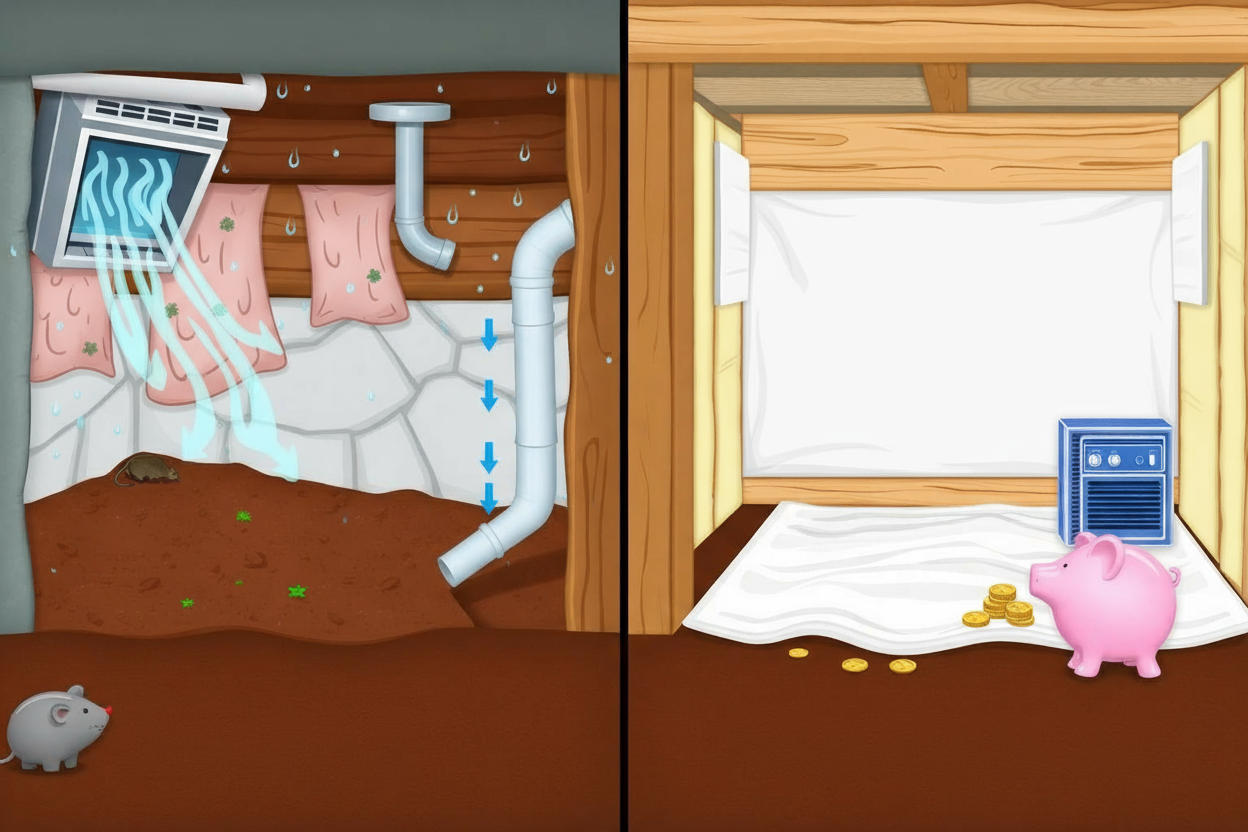
Mold is a symptom, not the disease. The disease is moisture. Without crawl space encapsulation, proper drainage, and humidity control, you're just temporarily removing mold that will inevitably return.
The Bottom Line for Chapel Hill Homeowners
Don't let myths and misinformation guide your approach to mold. The stakes are too high both for your family's health and your home's structural integrity. If you suspect mold in your Chapel Hill, Durham, Raleigh, Cary, Clayton, Wendell, or Zebulon home:
- Get a professional inspection
- If mold is present, hire certified remediation specialists
- Fix the moisture source (usually requires encapsulation in our climate)
- Verify successful remediation with air quality testing
- Implement prevention measures to ensure mold doesn't return
Get Facts, Not Fiction
Triangle Crawlspace and Mold Pros provides honest, science-based assessments of your mold situation. Our NORMI-certified technicians won't upsell unnecessary services or use scare tactics. We'll tell you exactly what you're dealing with and what it takes to fix it permanently.
Schedule Honest AssessmentAll cases described are real projects we've completed, with identifying details changed to protect homeowner privacy. Advice in this article is for informational purposes and does not replace professional assessment of your specific situation.